In this article
What to know
- Macimorelin is an oral diagnostic test for adult GH deficiency. Its validation, safety precautions and cutoffs should not be confused with an ongoing peptide treatment.
- The preparation, population and measured endpoint define the conclusion.
- Study regimens describe supervised research and are not personal treatment instructions.
A diagnostic stimulus answers a different question
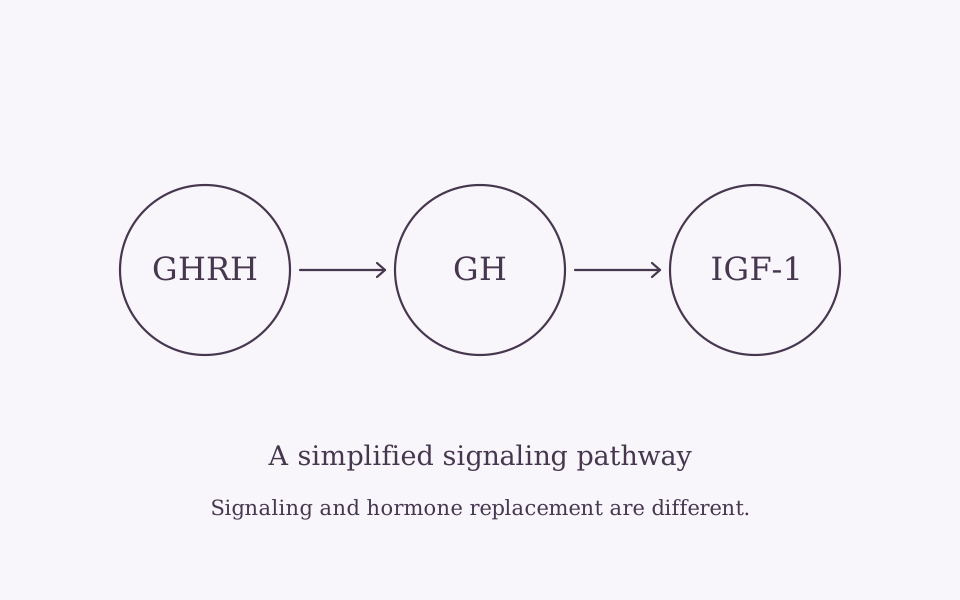
Macimorelin is used to assess whether an adult has growth-hormone deficiency under a supervised testing protocol. It is not a daily treatment for recovery, sleep or healthy aging. [1] [2] That distinction is useful in a market where several products are described as stimulating growth hormone. A substance can be valuable because it provokes a measurable response during a test without being a therapy a patient should take repeatedly. The diagnostic decision also needs a plausible clinical context. A low energy level or an interest in a peptide program does not, by itself, establish that a stimulation test is the appropriate next step. [3]
The validation trial compared two testing methods
The multicenter study used a randomized, open-label, two-way crossover design comparing oral macimorelin with the insulin tolerance test. The efficacy analysis included thirty-eight participants considered highly likely to have adult GHD, thirty-seven intermediate-likelihood participants, thirty-nine low-likelihood participants and twenty-five matched healthy controls. [1] This is a diagnostic validation population, not a group randomized to long-term treatment or placebo. The experiment examined how the tests classified people. It cannot demonstrate that treating every person who receives a low response improves quality of life, or that a particular commercial sermorelin service is appropriate after testing.
The cutoffs belong to their own protocols
Using prespecified thresholds of 2.8 ng/mL for macimorelin and 5.1 ng/mL for the insulin tolerance test, negative agreement was 95.38 percent and positive agreement 74.32 percent. Reported sensitivity was 87 percent and specificity 96 percent. [1] These figures do not describe a perfect test, and the different thresholds should not be exchanged. Agreement compares classification by the two methods, while sensitivity and specificity require assumptions about the diagnostic groups. A reader should retain that distinction before treating a single percentage as a guarantee that the test will settle every uncertain case or explain every nonspecific symptom. A useful report should therefore state which threshold was used rather than simply label the result positive or negative. Without that information, another clinician may be unable to understand why the test was considered supportive or how an unexpected finding should be reconciled with the patient’s history.
For the wider diagnostic comparison, read adult GH stimulation testing.
An oral test still requires preparation and sampling
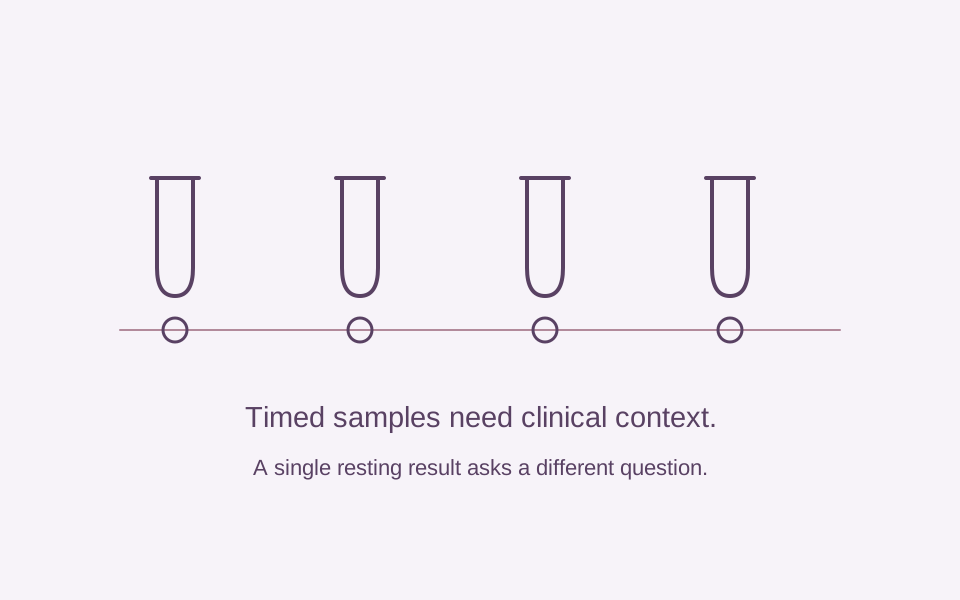
The prescribing information describes a single oral dose of 0.5 mg/kg after fasting, with GH sampling at thirty, forty-five, sixty and ninety minutes. [2] Those details explain a clinical procedure; they are not instructions to obtain or administer the drug independently. The preparation, medicines and timing can affect interpretation. A person considering testing should receive instructions from the testing center and clarify how the result will be reviewed. The fact that the stimulus is swallowed rather than injected may simplify one part of the appointment, but it does not turn the test into a home wellness measurement or make its result independent of clinical context.
Safety and interactions remain part of the appointment
The label warns about QT prolongation and interactions with medicines that can affect the heart rhythm or the test’s performance. [2] That is why the testing team needs an accurate medication list rather than a patient stopping medicines on their own. A diagnostic procedure can be useful while still requiring selection and precautions. The comparison with an insulin tolerance test should also consider the individual’s circumstances, not only which option sounds easier. Convenience matters after the clinician has determined that the method is appropriate and that the test can answer the actual diagnostic question with an acceptable level of risk.
Pretest likelihood changes the meaning of a result
The Endocrine Society places adult-GHD evaluation within a clinical history that may include pituitary disease, surgery, irradiation or other hormone deficiencies. [3] The reason for suspicion matters when interpreting a borderline or unexpected response. A result that fits a strong pituitary history is different from an isolated low number in someone with a low prior likelihood of the condition. This is not a reason for a reader to calculate their own diagnosis. It is a reason to ask how the clinician chose the test, which cutoff applies and whether the overall picture is consistent enough to support the next decision.
A diagnosis does not select a retail peptide service
Even when testing supports adult GHD, the next discussion concerns the appropriate evidence-based management of that diagnosis. Macimorelin’s validation does not prove that current compounded sermorelin is equivalent to an approved GH-replacement strategy. It also does not validate an anti-aging use in a person without the relevant diagnosis. Keep the diagnostic stimulus, condition and proposed therapy distinct. A clinic should be able to explain each step without relying on the shared phrase growth hormone. That clarity helps prevent a legitimate test from becoming a marketing bridge to a treatment choice that the test itself never compared.
What to clarify before arranging testing
A useful conversation identifies the reason for testing, the selected protocol, relevant medicines, the applicable laboratory interpretation and who will discuss the result. It should also explain what an equivocal finding would mean and whether additional evaluation may be needed. If a paid treatment program is already being proposed, ask whether the testing decision is independent of that purchase. The aim is a coherent clinical explanation rather than a collection of hormone numbers. Macimorelin can contribute to that explanation in appropriate adults, but its value comes from answering a specific diagnostic question, not from promising optimization or automatically directing someone toward a particular subscription.
For the practical terms of a consultation-led service, see our Defy Medical review; a service review does not replace specialist diagnosis.
Sources
Research describes groups and specific study conditions. Your medical history, symptoms and treatment decisions require advice from your own qualified clinician.