What to know
- Sermorelin stimulates a pathway; recombinant GH supplies the hormone.
- Mechanism does not demonstrate clinical superiority.
- GHRH analogues must remain distinct when interpreting trials.
The pathway in plain language
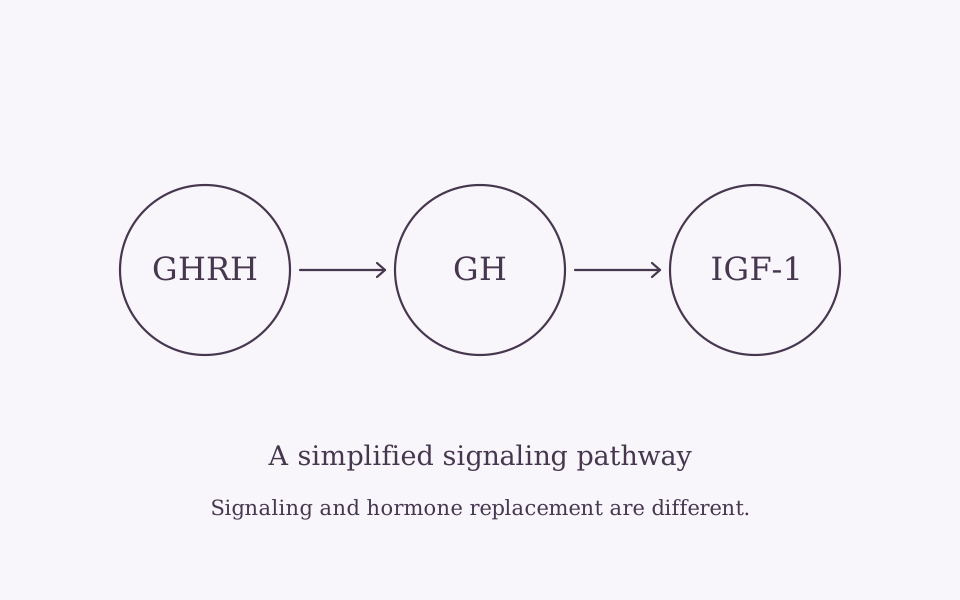
Growth-hormone-releasing hormone signals the pituitary to release growth hormone. GH in turn participates in signaling that includes IGF-1. Sermorelin is a GHRH analogue; recombinant growth hormone supplies GH itself. That distinction explains why the treatments are not interchangeable. It does not, by itself, establish that one approach delivers all the desired benefits with fewer risks. Mechanism is a starting point for investigation.
A human experiment shows the sequence
The Vitiello study explicitly used sermorelin acetate and measured hormonal changes during six months of treatment. The trial helps establish that this intervention can affect the pathway under a research protocol. It also separately assessed cognitive tasks, which is the right conceptual distinction: a biological response and a useful outcome are different observations. A commercial program should identify both rather than treating increased signaling as the finished goal.
Why an intact pathway matters
A drug that stimulates the pituitary depends on the relevant system responding. A replacement hormone and a secretagogue therefore raise different clinical questions. Suspected pituitary disease requires appropriate evaluation; an online symptom list is not an adequate explanation. The Endocrine Society guideline treats adult growth hormone deficiency as a clinical diagnosis, generally supported by stimulation testing, with defined exceptions. It does not reduce diagnosis to feeling older or wanting better recovery.
Pulses do not settle safety
The language of natural pulses can sound reassuring because it describes physiology. But a change in secretion pattern is not the same as a controlled demonstration of clinical safety or superiority. Ask for evidence involving the actual drug, route and intended population. Claims that a signaling approach has none of the risks of replacement go beyond what a mechanism alone can establish. Trial observations and appropriate follow-up still matter.
Be precise about analogues
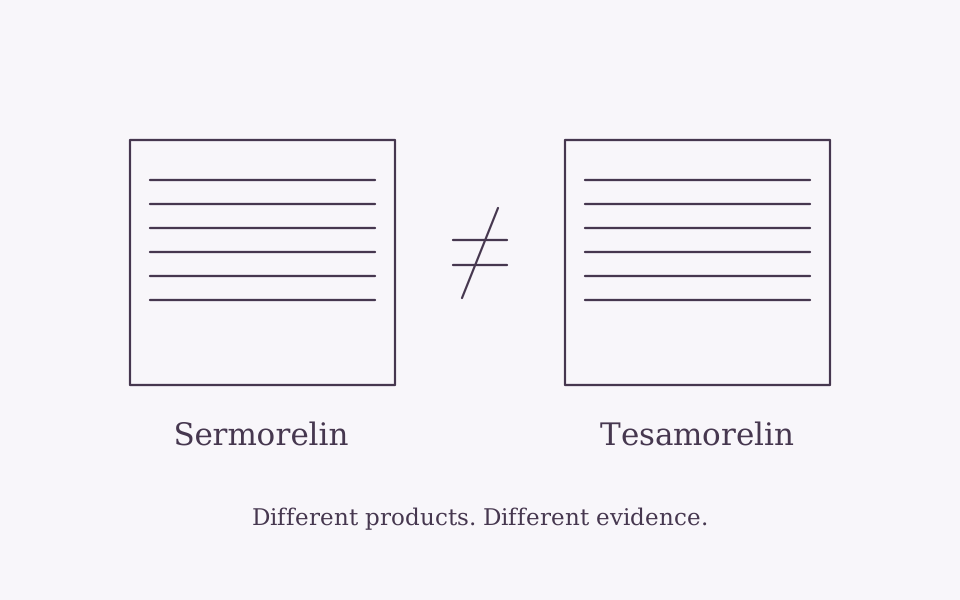
Sermorelin and tesamorelin are both discussed under GHRH, yet their formulations, histories and studies differ. Broader labels such as secretagogue include still other compounds. A paper about one member of this group is not automatically evidence for another. When a provider cites a pathway review, ask for the underlying human trial and the exact molecule used, especially when the promised result is a symptom or functional improvement.
A diagram can hide a decision
The sequence from a signal to a hormone to a downstream marker is useful for understanding biology. It can also look deceptively inevitable when drawn as a series of arrows. Each arrow leaves questions about magnitude, timing, tissue response and whether changing the pathway improves the outcome a person cares about.
When reading an illustrated claim, put the measured human result next to the relevant arrow. Leave untested steps labeled as hypotheses. This separates established observations from a persuasive narrative without requiring the reader to dismiss the mechanism. It is possible to understand why researchers study an intervention and still conclude that a particular consumer benefit remains unproven. That is a more useful position than treating a plausible pathway as a purchasing instruction.
Turn the mechanism into better questions
Ask what problem the clinician believes is being addressed, whether the proposed pathway explains it and what result would count as success. Then discuss realistic alternatives, monitoring and the complete cost. A well-explained mechanism can make the consultation easier to follow, but should not pressure someone into treatment. Our research and provider reviews keep the signaling description separate from evidence of benefit and from the practical terms of a service.
Sources
Research describes groups and specific study conditions. Your medical history, symptoms and treatment decisions require advice from your own qualified clinician.