In this article
What to know
- The cited intervention was recombinant GH, not sermorelin.
- Lean-mass changes did not establish added strength in the controlled trial.
- Acute GH peaks are not a validated consumer performance target.
A stronger-looking scan is not a strength result
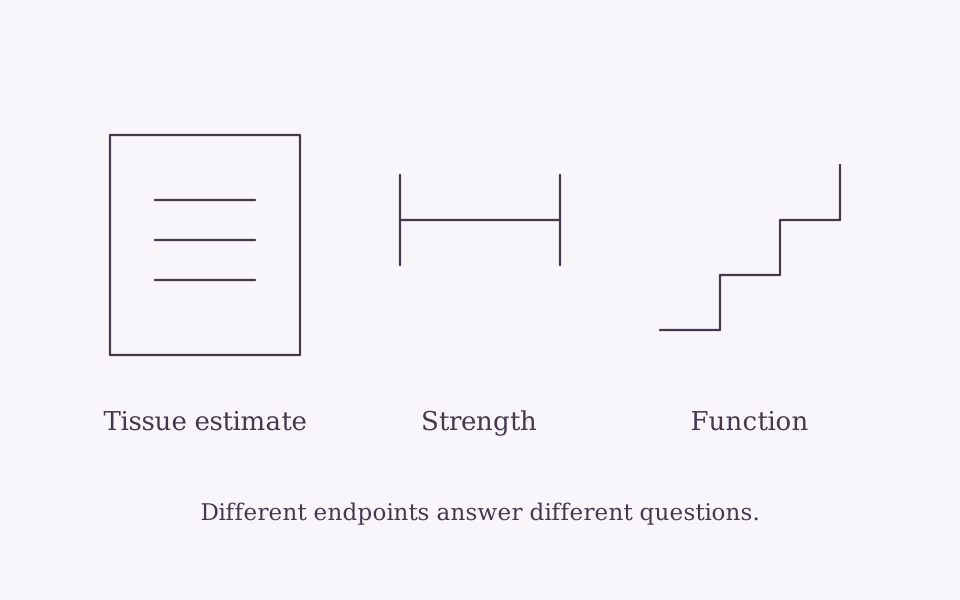
A controlled trial of recombinant human growth hormone in older men increased lean body mass and reduced fat mass without improving the strength response to training. [1] That finding is useful when a peptide sales page moves quickly from growth-hormone signaling to muscle performance. It shows why a body-composition endpoint cannot be silently substituted for a functional one.
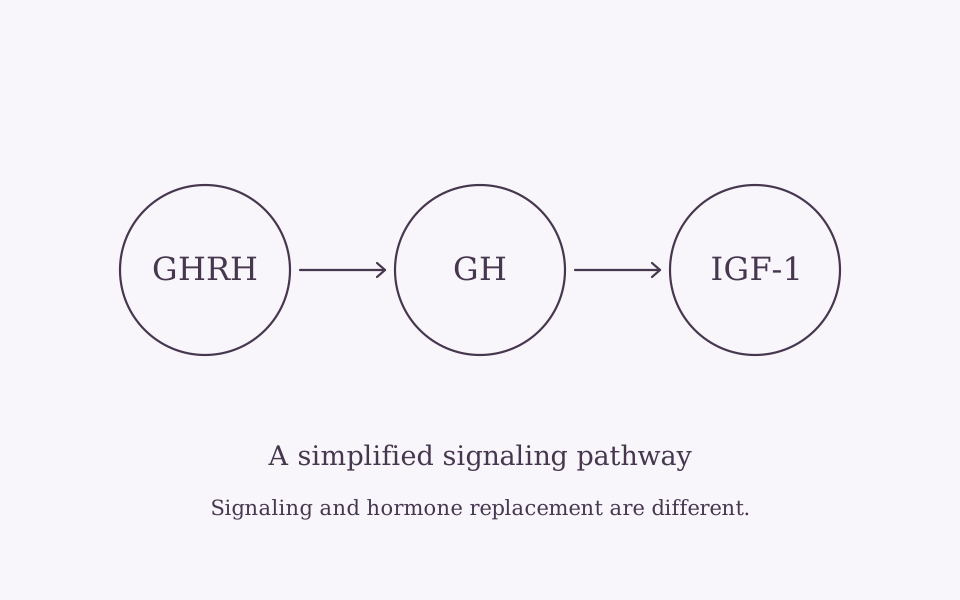
It also requires a molecular boundary: recombinant GH is not sermorelin. The trial cannot directly prove what a modern sermorelin preparation does. Its role here is to examine a common inference about endpoints, rather than to transfer either benefit or harm across two different interventions. A precise reading keeps both distinctions intact.
What the controlled exercise experiment did
Taaffe and colleagues studied 18 healthy men aged 65–82. After 14 weeks of progressive resistance training, participants received recombinant GH or placebo during another ten weeks of training. Strength was measured alongside body composition and hormone-related values. [1] This design separates a training experience from the additional intervention more carefully than an uncontrolled before-and-after testimonial.
The useful question is the difference between randomized groups during the intervention period. It is not whether someone improved at any point while exercising. Training itself can change an outcome, so an account that attributes all improvement to the added medicine would lose the purpose of the comparator.
The favorable and null outcomes coexist
The same experiment can produce a favorable body-composition result and a null strength result. That is not an inconsistency to edit away. It describes different measured outcomes. [1] A reader paying mainly to become stronger should want the functional outcome kept in the headline, rather than being reassured by the scan alone.
Likewise, a functional test does not answer every concern about appearance or composition. The point is to choose the outcome before judging the evidence. A service should be able to say which result it is discussing, why it matters and whether it matches the person's goal. Otherwise a broad phrase such as muscle benefit can conceal several different propositions.
To understand the related evidence, read Lean mass fat mass evidence.
Acute hormone responses do not predict all adaptation
Pyka and colleagues examined age-related differences in GH response to resistance exercise in younger and older adults. [2] This was a physiological question about circulating response, not proof that correcting the response improves function. A lower hormone peak can be scientifically interesting without identifying the limiting cause of training progress.
The distinction matters because an attractive causal story can outrun the experiment. Observing a smaller acute response, proposing an intervention and demonstrating better strength are three separate steps. A treatment pitch often compresses them into one. The original study supports the first kind of observation; the later steps need their own evidence and cannot be completed by a more confident description of the mechanism.
Long-term training and short hormone sampling differ
A separate sustained-training study followed five men and nine women in an exercise or control program while examining GH and IGF-related responses. [3] Its small physiological design helps distinguish the time scale of training from the time scale of an acute hormone measurement. It does not establish that a higher response is a validated consumer target.
For a reader, the practical lesson is to ask when the sample was taken and what the researchers were trying to infer from it. A transient peak, a resting concentration and a functional improvement describe different things. Putting them beside one another without explanation can make a reference list look more persuasive while leaving the purchase question unanswered.
Sermorelin needs its own performance evidence
A service proposing sermorelin for strength or recovery should identify a relevant study of the actual analogue, route and outcome. The recombinant GH trial cannot do that job, and the acute exercise papers cannot either. These sources are useful because they expose an endpoint error, not because they supply a complete verdict on a different prescription.
Ask whether the claimed result concerns measured force, lean mass, soreness, recovery time or a person's impression of training quality. Then ask how the comparator and background exercise were handled. A testimonial after starting several changes at once cannot isolate one component. The benefit claim should become more specific as the evidence becomes more specific.
For the practical product comparison, see Compare two injection services.
A buying decision tied to the real goal
If the goal is improved function, define the function before choosing a treatment. A clinician or other appropriate professional can help interpret the concern in context. The commercial agreement should then explain what is being prescribed, how progress will be reviewed and what continuing charges apply. A laboratory marker should not become the only reason for indefinite renewal when the desired functional outcome remains unproven.
The evidence here supports a disciplined conclusion: lean mass, acute GH release and strength are separate endpoints. A positive result in one cannot stand in for the others. It also preserves the molecular distinction between GH and sermorelin. A service earns confidence by explaining those boundaries plainly, rather than using a broad muscle claim to bridge gaps the studies did not cross.
Sources
Research describes groups and specific study conditions. Your medical history, symptoms and treatment decisions require advice from your own qualified clinician.