What to know
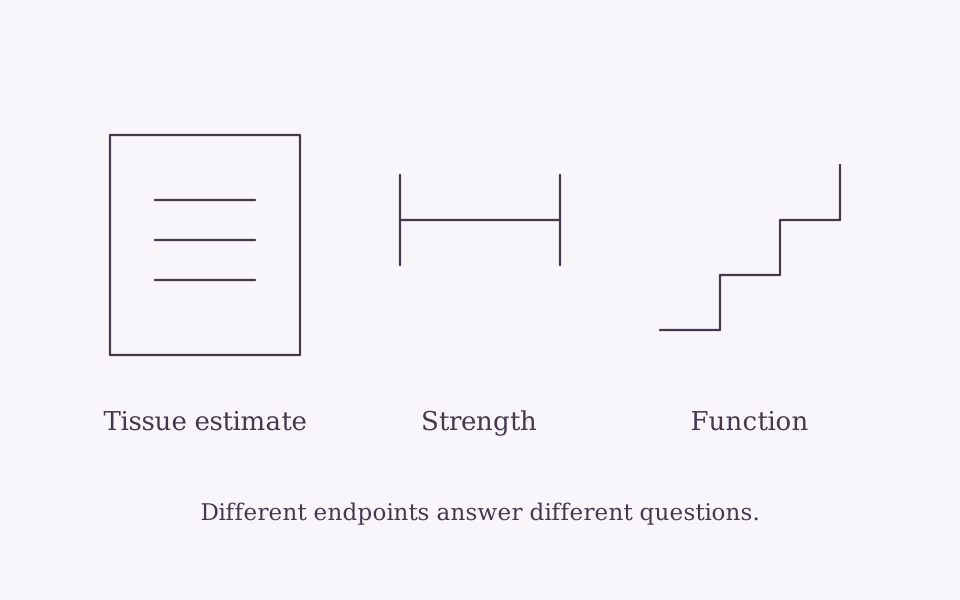
- Lean mass, visceral fat and body weight are different endpoints.
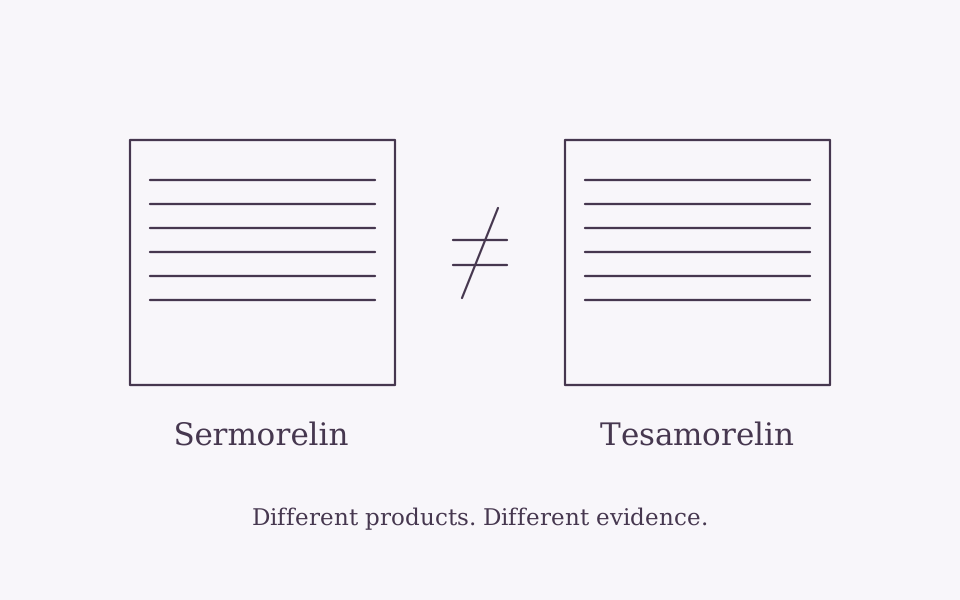
- Tesamorelin findings cannot establish sermorelin efficacy.
- A scan result should be considered alongside function and treatment burden.
Define the benefit before comparing numbers
A body-composition claim can mean more lean tissue, less total fat, less visceral fat or a different scale weight. These are different outcomes. It is also possible to change a measured compartment without improving strength or daily function. A careful comparison names the measurement method, population and duration, then asks whether the result actually addresses the reader’s goal rather than relying on a before-and-after image.
What a sermorelin-related study measured
The Vittone study of nightly GHRH 1–29 in older men collected DEXA body-composition data alongside muscle strength, endocrine and metabolic measures over six weeks. Its design illustrates that a hormone response and a body-composition response must be tested separately. This brief physiological study should not be used to promise large sustained changes in a wider population or to validate a different retail preparation.
Visceral fat has a distinct evidence base
The EGRIFTA WR label describes trials in adults with HIV and excess abdominal fat. That population and indication are integral to the result. The label does not designate tesamorelin for weight-loss management. A service cannot reasonably borrow those findings to establish that compounded sermorelin reduces visceral fat in otherwise healthy customers. Shared signaling biology does not erase the treatment, population and endpoint differences.
Lean tissue does not equal muscle performance
A scan partitions body tissues using a measurement model. A functional test asks what a person can actually do. Even when both change favorably, a trial should report them separately; when they disagree, the disagreement is informative. Ads that report only a favorable lean-mass percentage can leave the practical question unanswered. Check whether strength, walking, stair climbing or other relevant capabilities were measured and meaningfully improved.
Look for the missing comparison
A diet or exercise program can influence body composition while a person is also receiving treatment. Without comparable care in a control group, attributing the entire change to one prescription is unreliable. Ask about baseline differences, completion rates and the absolute between-group effect. A selected success story cannot reveal how often other participants saw no worthwhile change or discontinued because of inconvenience or symptoms.
Keep absolute and relative changes separate
A percentage change in a tissue compartment can be difficult to interpret without the starting amount. Where a paper supplies absolute differences, read them alongside percentages and uncertainty estimates. Also check whether the result concerns an average across all randomized participants or only those completing treatment. These distinctions can materially change the impression created by a headline.
A useful consumer question is what capability the proposed change is meant to support. A scan may be relevant, but a plan focused on daily function should explain how function will be assessed. If the service relies entirely on a body-composition number, ask why that number is an appropriate substitute for the goal. A measurement can inform a decision without becoming the sole definition of success.
Use the result to frame a discussion
Describe your concern as a capability or concrete health goal rather than asking for a laboratory change. Ask which evidence applies to the actual formulation and what uncertainty remains. Include the time spent on administration, monitoring and follow-up when deciding whether a plan is worthwhile. Our provider reviews separate service terms from scientific claims so that convenience does not become a substitute for demonstrated body-composition or functional benefit.
Sources
Research describes groups and specific study conditions. Your medical history, symptoms and treatment decisions require advice from your own qualified clinician.