What to know
- Short GHRH-(1–29) observations do not establish long-term metabolic safety.
- Tesamorelin findings are indirect evidence for sermorelin.
- The timing, interpretation and cost of follow-up belong in the service decision.
A favorable scan is not a complete metabolic verdict
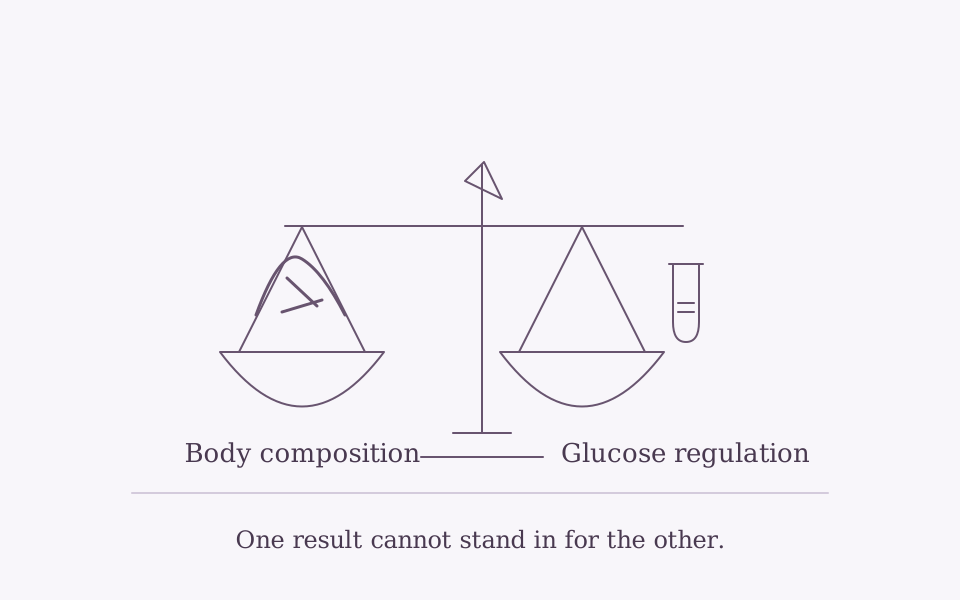
Changes in body composition do not establish that a GHRH treatment improves glucose control. The adult evidence includes short experiments with GHRH-(1–29) and longer trials using tesamorelin, a different analogue. Their glucose and insulin findings need to remain attached to the actual drug and population. They cannot provide a personalized risk estimate for every compounded sermorelin service. [1] [2] [3]
The practical consequence is straightforward: a plan aimed at changing body composition should still explain its metabolic assessment and follow-up. A persuasive fat-loss narrative is not a reason to leave that part of the agreement vague.
What a short GHRH-(1–29) experiment tells us
Corpas and colleagues studied older men receiving two GHRH-(1–29) amounts in fourteen-day treatment periods. Hormonal responses changed, while fasting glucose and urinary C-peptide did not. This is useful human information about a short protocol. It cannot establish that a different preparation used for months or years leaves every aspect of glucose metabolism unchanged. [1]
The duration matters as much as the result. A brief experiment can detect a response within its observation window; it cannot demonstrate durability merely because no change appeared in a limited set of measurements. The absence of an observed fasting-glucose effect should be reported precisely, without becoming a blanket safety claim.
Insulin and glucose can tell different stories
The 2012 tesamorelin cognition trial also collected metabolic measurements. It reported increased fasting insulin within the normal range in participants with mild cognitive impairment, but not in cognitively healthy participants. The analogue and subgroup are important. That finding neither supplies a sermorelin adverse-event frequency nor supports ignoring insulin because a value remains within a reference interval. [2]
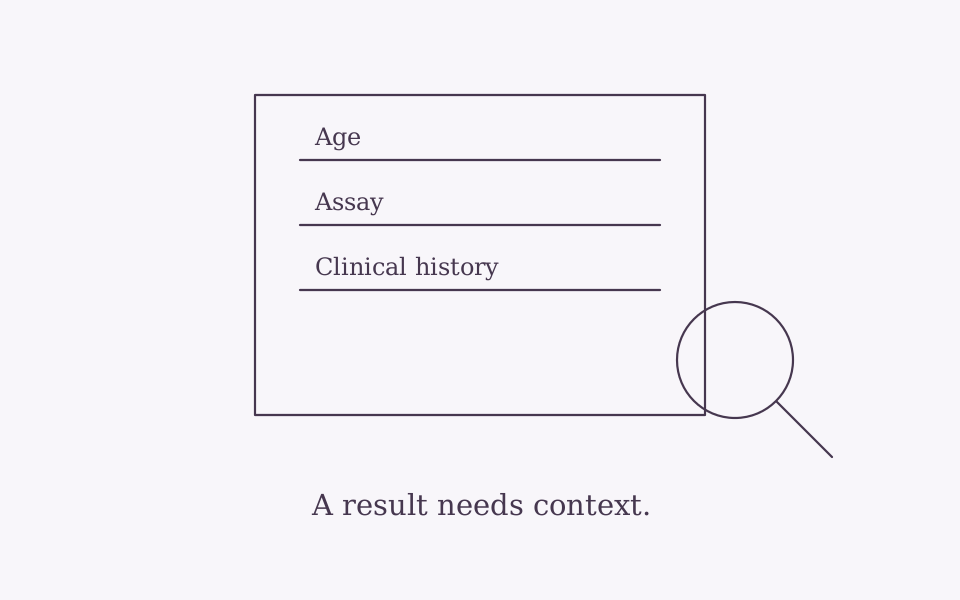
A reference interval describes a laboratory context, not the entire interpretation of a treatment response. The clinician needs the baseline condition, other measurements and the purpose of follow-up. A consumer should not be expected to infer a continuation rule from a normal flag on a portal.
The timing of measurement changes the picture
Stanley and colleagues studied tesamorelin for six months in people with HIV and abdominal fat accumulation. Visceral and liver fat decreased. Fasting glucose rose relative to placebo at two weeks, while the overall six-month changes in fasting and two-hour glucose were not significant. Both observations belong in the summary. Reporting only the final visit would conceal the earlier response. [3]
This is indirect evidence for a sermorelin shopper, not a transferable prediction. It nevertheless illustrates why monitoring schedules need a reason: an early change and a later average can coexist. A service should be able to explain when it evaluates the person and how interim findings affect care.
Do not merge distinct metabolic outcomes
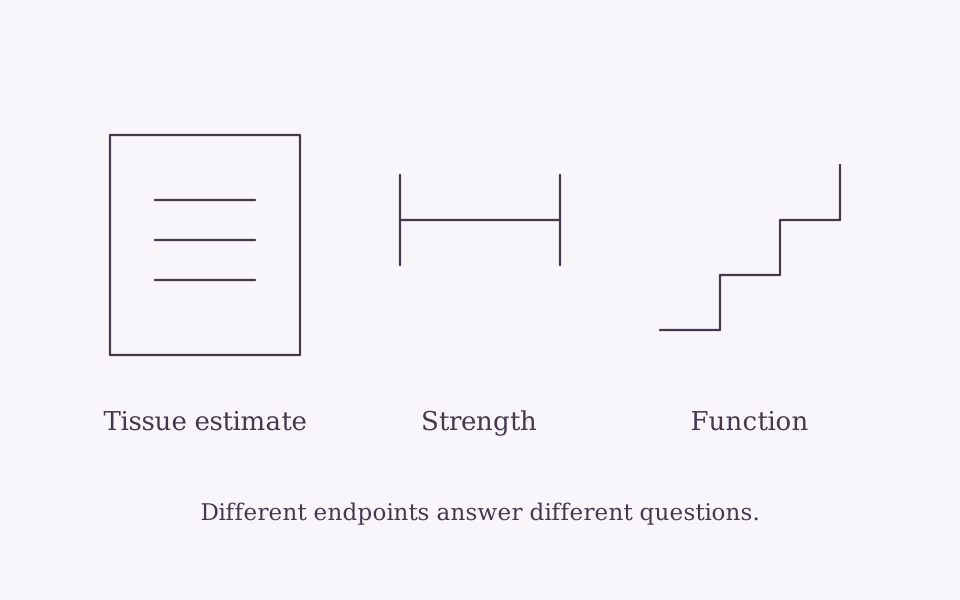
Fasting glucose, glucose after a challenge, insulin concentration and insulin sensitivity describe different aspects of metabolism. Body weight, lean mass and visceral fat add still more outcomes. A favorable result in one does not settle all the others. If a provider uses the phrase metabolic improvement, the useful next sentence should identify the measured result.
The same discipline prevents the opposite error. A change in one marker does not automatically establish a new disease or prove that every similar treatment is harmful. Interpretation requires the clinical context and the relevant evidence. The purpose of these distinctions is a more accurate decision, not the accumulation of alarming numbers.
Make monitoring part of the service comparison
A complete offer should explain which baseline information the clinician needs, who orders and reviews testing, what follow-up is included and how extra testing is billed. Those details change both the cost and the burden of continuing. A medication-only monthly equivalent can be a poor guide when evaluations and laboratory charges sit elsewhere.
Ask how the plan changes if the intended benefit does not appear, the preparation changes or metabolic findings warrant reassessment. The answer should come from the treating clinician. A support team can resolve a shipping problem, but a message allowance is not the same thing as a clinical decision process.
A decision worth taking to a consultation
For someone with prediabetes, diabetes or another metabolic concern, the proposed treatment belongs in the same discussion as existing care and medicines. Bring the exact formulation and the outcome being offered. Do not use a trial protocol to alter personal dosing or treat a scan change as a reason to stop established management.
For comparing services, the strongest offer is the one whose clinical purpose and ongoing commitment can be understood together. Our CoreAge–AgelessRx comparison separates the advertised charge from the complete plan. Use it alongside the evidence: an attractive price or easier routine cannot answer whether the metabolic tradeoff is appropriate for an individual.
Sources
Research describes groups and specific study conditions. Your medical history, symptoms and treatment decisions require advice from your own qualified clinician.