In this article
What to know
- Historical GEREF records concern identified injections.
- Exposure evidence and outcome evidence answer different questions.
- Multi-ingredient oral products need formulation-specific support.
An easier routine creates a new evidence question
An oral sermorelin blend may look attractive because it removes the injection step or combines several ingredients in one preparation. That is a practical proposition. It is not evidence that the product achieves equivalent exposure or the same clinical outcome. A modern dissolving tablet, swallowed capsule or other oral preparation should be described exactly before any trial is applied to it.
This guide does not claim that every oral product is ineffective. It explains why a historical injection result cannot establish a current oral combination's effectiveness. The missing comparison needs to remain visible when the service discusses convenience, starting price or a broad list of potential benefits.
The historical record does not cover every route
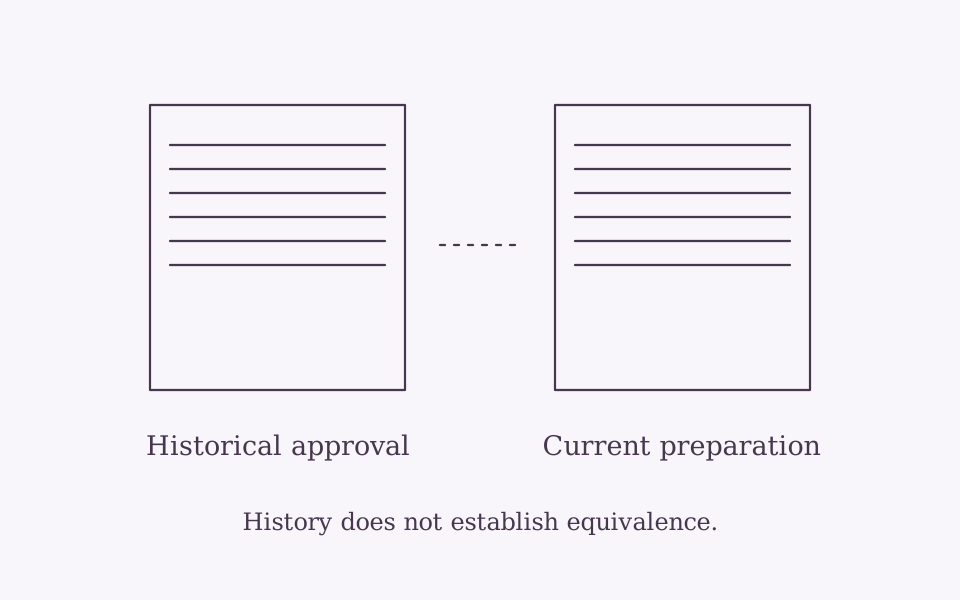
FDA's 2013 GEREF determination concerned specified historical injectable products and whether they were withdrawn for reasons of safety or effectiveness. [1] It did not approve every subsequent formulation sharing the ingredient name. A service cannot use that record as if it were a current approval of its dissolving tablet or multi-ingredient capsule.
Regulatory history answers a particular question about a particular product. It should not become a general quality seal. The useful request is for the exact status of the product being proposed today, alongside its pharmacy and route. A clear answer may be less dramatic than a historical approval claim, but it is more relevant to the actual purchase.
A clinical injection trial stays an injection trial
The Vitiello adult study used an identified injected GHRH 1–29 NH2 preparation and measured selected cognitive outcomes. [2] Its existence matters to the adult evidence discussion. It does not establish the absorption, dose equivalence or benefits of an oral blend sold by another service.
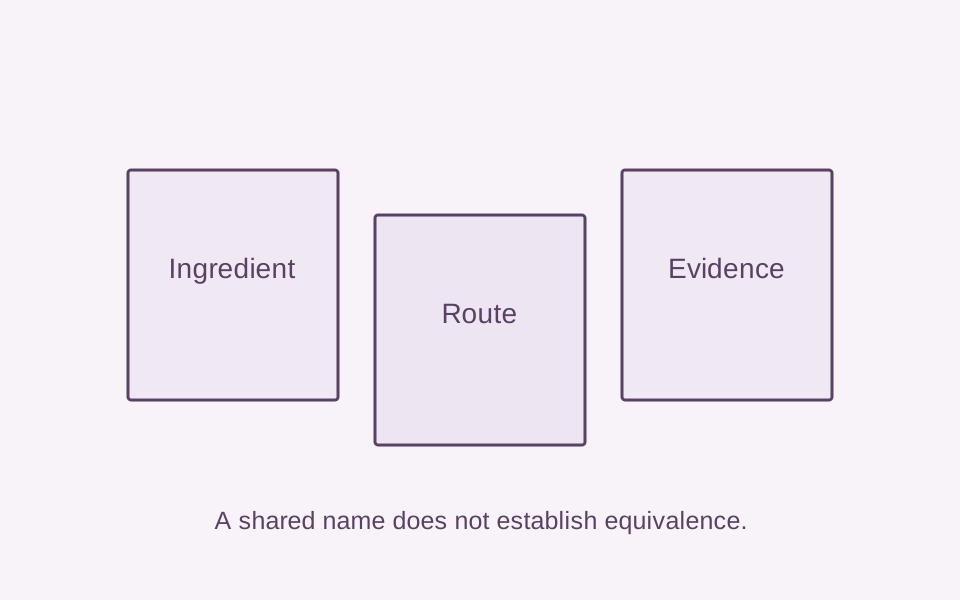
An ingredient name is only one part of an intervention. The route determines how the material is presented to the body, and the formulation can change exposure. To claim equivalence, a seller needs an applicable bridge rather than an assumption. A study of one route cannot supply missing measurements for another simply because both products are described as sermorelin.
To understand the related evidence, read Geref approval compounded services.
Exposure and benefit need separate support
A formulation study could establish that a component reaches a measured compartment under defined conditions. A clinical study would still be needed to establish a meaningful benefit. Those are related questions, but neither should be hidden inside a phrase such as bioavailable. A percentage needs a specimen, timing and comparator before it can be interpreted.
For an oral preparation, ask whether the evidence concerns the exact finished formulation, a similar formulation or a different peptide altogether. Then ask whether the experiment measured an outcome matching the proposed goal. A delivery claim can be scientifically interesting while leaving the practical reason for paying unresolved. More convenient administration does not close that gap automatically.
Companion ingredients change attribution
Current medication menus can combine sermorelin with NAD and B12, or pair it with glycine in dissolving tablets. [3] These options establish that different commercial formulations exist. They do not demonstrate that the mixtures work better or that a response can be attributed to sermorelin.
A combination needs a reason for every component, including whether the amounts and route match relevant research. If a person starts several ingredients at once, a subsequent change does not isolate which ingredient mattered. A useful clinical explanation acknowledges that attribution problem. It should not let evidence for one component become evidence for the whole mixture, or allow three ingredient names to count as three demonstrated benefits.
Handling and cost also depend on the preparation
An oral format may reduce injection supplies and handling steps. The actual pharmacy instructions still determine storage and usable period. Do not assume that every tablet or capsule has the same stability, packaging or renewal interval. Ask for the instructions attached to the selected prescription and clarify what happens when a shipment is delayed.
For cost comparison, keep the first payment, recurring payment and quantity supplied visible. A lower price per tablet is not a value conclusion if equivalence of exposure and outcome remains unestablished. It is possible to compare the convenience honestly without converting convenience into proof of efficacy. The financial agreement and the clinical rationale should each stand on their own.
For the practical product comparison, see Compare oral sermorelin services.
What evidence would make the case stronger
A persuasive bridge would identify the finished preparation, demonstrate relevant exposure under controlled conditions and connect it to an appropriate clinical outcome. Ideally the comparison would address the actual alternative being promoted, including tolerability and the routine required. That is a description of the evidence needed, not a claim that one particular product has already supplied it.
A transparent service can explain what is known, what is inferred and what remains untested. It can also explain why the oral route is being considered for the individual. A broad assurance that the product is compounded or prescription-only does not answer the route question. These labels describe aspects of supply and oversight, not a demonstrated therapeutic result.
The consumer verdict
Choose an oral option only after the clinician has explained the exact formulation, its evidence and the reason it fits the proposed care plan. Compare it separately from injectable services and keep any uncertainty in the efficacy comparison visible. The historical FDA record, the adult injection trial and the current pharmacy menu each contribute different information. [1] [2] [3]
The useful conclusion is that convenience deserves consideration, while equivalence deserves evidence. A consumer should not have to infer the latter from the former. When a service clearly distinguishes those propositions and provides complete continuing terms, the decision becomes easier to assess without pretending that every route or blend is the same treatment.
Sources
Research describes groups and specific study conditions. Your medical history, symptoms and treatment decisions require advice from your own qualified clinician.