In this article
What to know
- The osteoporosis trial tested recombinant growth hormone, not sermorelin.
- Long-term fracture percentages are not a simple randomized risk reduction.
- Diagnosed deficiency differs from a general wellness use.
A bone claim needs the actual intervention
Research on growth hormone and bone provides reasons for scientific interest, but it does not establish that a modern sermorelin subscription prevents fractures. A trial in women with postmenopausal osteoporosis tested recombinant growth hormone on top of other treatment; its longer follow-up examined fractures and quality of life. A separate long-term cohort involved adults with diagnosed growth hormone deficiency. [1] [2] [3] Those are distinct clinical settings and a different intervention from stimulating growth hormone release with sermorelin.
The useful first step is to identify the drug, the population and the outcome. A shared hormone pathway is not enough to make all of the results interchangeable with a retail bone-strengthening claim.
The original osteoporosis trial had a limited blinded phase
Landin-Wilhelmsen and colleagues studied eighty women aged fifty to seventy with osteoporosis who were already receiving estrogen treatment. They randomized participants to two recombinant growth-hormone amounts or placebo. All received calcium and vitamin D. The double-blind phase lasted eighteen months; active treatment continued longer. [1]
The paper reported improvements in selected bone mineral measures, with differences depending on region, amount and follow-up time. [1] Those details matter because the experiment was not a simple comparison of sermorelin against no care. Existing treatment, changing observation phases and the measured skeletal region all affect interpretation. A result at one site and time point should not be generalized into a claim that every person's bones become stronger throughout the body.
The ten-year fracture headline needs its denominator
The later follow-up reported that fractures in the patient group decreased from a historical baseline proportion of 56% to 28%, while the separate population-control group's proportion increased. Fractures were evenly distributed among the original treatment groups at follow-up. Quality of life did not improve. [2] This should not be summarized as a randomized finding that growth hormone halved every individual's fracture risk versus placebo.
A before-and-after comparison over a long follow-up is not the same as a clean contemporaneous randomized contrast. The duration is valuable, but the interpretation must reflect what happened to the original groups and other treatments. A striking percentage is most useful when the reader understands exactly who was counted and which comparison produced it.
For the wider evidence context, read sermorelin women midlife evidence.
A scan and a fracture answer different questions
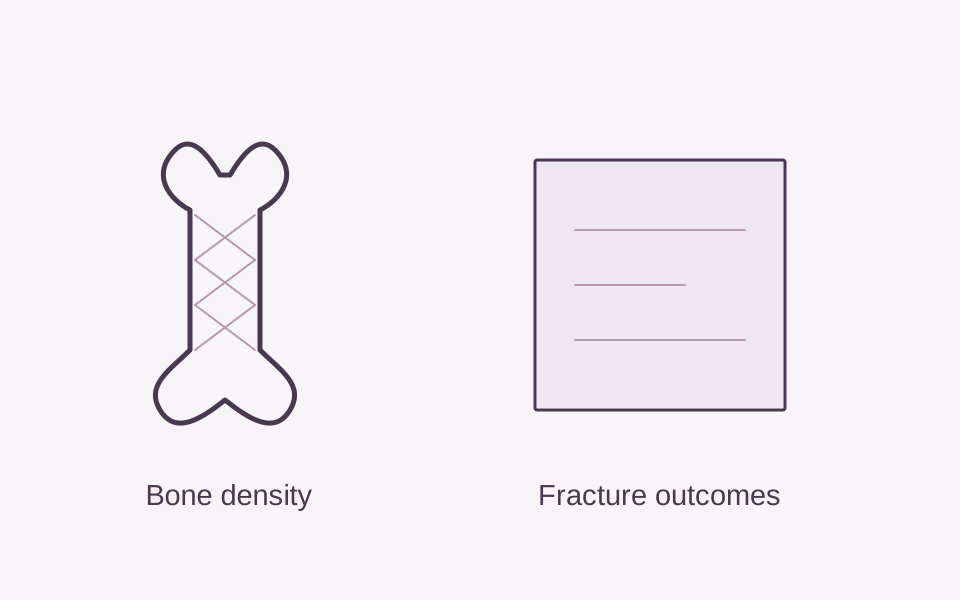
Bone mineral density is an important measurement, but a change in a scan is not logically identical to a reduction in fractures. The osteoporosis papers distinguish mineral measurements, clinical fracture observations and quality of life. [1] [2] Those outcomes should remain separate in a consumer explanation.
For example, a product page might describe increased density and place fewer fractures in the next sentence as if one automatically proves the other. That is an inference requiring evidence of its own. A study can be informative about bone metabolism without being large enough to establish fracture prevention. When the clinical goal is avoiding fractures, ask whether the cited experiment actually tested that outcome adequately rather than relying on a more convenient surrogate measurement.
Replacement in diagnosed deficiency is another setting
The Leiden cohort followed adults receiving recombinant growth hormone for diagnosed deficiency, assessing bone measures across years of treatment and recording fractures. Many had additional pituitary hormone deficiencies. [3] This helps describe long-term replacement care in an endocrine population. It is not a randomized demonstration that raising hormone activity in otherwise healthy adults produces the same result.
An observational cohort also has different limits from a blinded trial. Treatment selection, baseline health and other care can influence what is seen over time. The appropriate use of the cohort is to understand its actual population and follow-up, not to borrow its duration as proof of an unrelated wellness program. The clinical diagnosis is part of the evidence, not a detail that can be removed for a broader headline.
What a sermorelin provider should explain
If bone health is offered as a reason for a prescription, ask which exact preparation and study support that use. Establish whether the intended purpose is treating a diagnosed endocrine disorder, addressing osteoporosis or pursuing a general wellness goal. These questions lead to different evidence standards and care decisions. A service should be able to distinguish a hypothesis about growth-hormone signaling from a demonstrated fracture outcome.
The commercial agreement should be equally clear. Ask what evaluation is needed, who reviews existing treatment and what result would change the plan. A follow-up scan is a measurement, not an automatic reason to continue indefinitely. The important explanation connects the individual's clinical purpose with the monitoring and the intervention being considered, rather than treating any favorable movement in a marker as proof that the program is worthwhile.
The appropriate consumer conclusion
There is real bone research involving recombinant growth hormone, including a small osteoporosis trial and prolonged follow-up. Its findings do not justify promising fracture prevention from a compounded sermorelin service. The studies' drug, background treatment and clinical populations must remain attached to their results. [1] [2] [3]
A person concerned about osteoporosis or a previous fracture has a more useful discussion with the treating clinician than a search for the most ambitious peptide claim. Take the exact proposed product and the source being cited to that discussion. Provider comparisons can help assess the care arrangement and financial commitment afterward. They cannot bridge a gap between a hormone-related mechanism, a scan change and a clinical outcome that has not been demonstrated for the marketed program.
For a practical assessment of the offering, see our Nuform Health review; its purchase terms do not establish the clinical outcome.
Sources
Research describes groups and specific study conditions. Your medical history, symptoms and treatment decisions require advice from your own qualified clinician.